Quick Comparison Table
| Product | Best For | Key Ingredient(s) | Price Tier | Hair Type |
|---|---|---|---|---|
| Olaplex No.4P Blonde Enhancer Toning Shampoo | Platinum/ash blonde balayage with damage | Bis-aminopropyl diglycol dimaleate, Acid Violet 43 | Premium | Bleached, fine-to-medium |
| Redken Blondage Color Depositing Purple Shampoo | Moderate brassiness, salon-fresh maintenance | Salicylic acid, purple pigments | Mid-range | Blonde to light brown, color-treated |
| Redken Acidic Color Gloss Sulfate-Free Shampoo | Shine, color longevity, non-toning maintenance | Citric acid, amino acids, Vitamin E | Mid-range | All color-treated hair types |
| Kerastase Blond Absolu Bain Ultra-Violet | Blonde balayage needing moisture + toning | Hyaluronic acid, ultra-violet neutralizers | Premium | Dry, highlighted, bleached |
| Pureology Strength Cure Blonde Purple Shampoo | Brunette balayage with blonde highlights | Astaxanthin, keravis protein, violet pigments | Mid-range/Premium | Color-treated, fine-to-normal |
| L’Oreal EverPure Blonde Sulfate-Free Shampoo | Budget everyday maintenance, light brassiness | Iris botanicals, gentle surfactants | Budget | All blonde/highlighted, mild brass |
| Redken Color Extend Brownlights Blue Shampoo | Brunette balayage with orange undertones | Blue pigments, amino acids | Mid-range | Brown, brunette, balayage |
Introduction
Shopping for shampoo with balayage hair is quietly maddening. Most “color-safe” shampoos on the shelf are formulated generically for any dye job, which means they do very little for the specific and real problems that balayage creates: the lightened sections are porous and prone to dryness, the transition zones fade unevenly, and warm brassy undertones appear fast, especially when you wash frequently. Meanwhile, most “best of” lists online either recommend the same three products everyone already knows about, or they confuse balayage with an all-over bleach job, which is a meaningfully different situation chemically.
You Are Watching: Best Shampoo for Balayage Hair
Good shampoo for balayage hair needs to do at least one of three things well: protect color from fading, tone down brassiness, or restore moisture to damaged, porous lightened sections. The best options do two or three simultaneously. This list was built by cross-referencing current top-selling and top-rated products with ingredient-level analysis, verified community reviews from Amazon, Ulta, Sephora, and Reddit, and published expert commentary on color-treated hair chemistry.
Selection Criteria
How these products were chosen:
What balayage hair actually needs. Unlike a full bleach or a boxed dye, balayage creates a hair strand with two chemically distinct zones: unprocessed root and mid-shaft, and bleached or lightened ends and highlights. The lightened sections have lost more of their cuticle structure. They absorb water (and lose color molecules) faster than the unprocessed sections. The right shampoo must work with that reality, not pretend the whole strand is the same.
Sulfate standards. Sodium lauryl sulfate (SLS) and sodium laureth sulfate (SLES) strip color faster than mild surfactants. Products that contain only gentle surfactants (cocamidopropyl betaine, sodium lauroyl sarcosinate, sodium C14-16 olefin sulfonate in balanced formulas) were preferred. Products with SLS were only included if they had a specific, demonstrated toning purpose and are used infrequently.
Toning pigment quality. For blonde balayage, violet pigments (Acid Violet 43) counteract yellow tones based on color-wheel cancellation. For brunette balayage, blue pigments counteract orange. Products were evaluated for pigment concentration and how reported results matched expected color-theory outcomes, not just marketing language.
Moisture and bond support. Balayage-lightened sections are porous. Shampoos containing hydrolyzed proteins, hyaluronic acid, panthenol (provitamin B5), or bonding agents were rated more favorably for daily or near-daily use.
What was ruled out. Products without verifiable ingredient lists, products with no credible user review base (fewer than 200 reviews or reviews concentrated on a single platform), products with active consumer complaints about excessive dryness or scalp irritation, and products marketed only as “balayage” shampoos without meaningful formulation differences from generic moisturizing shampoos.
Price range. Budget ($8-$15), Mid-range ($18-$35), Premium ($36+).
What to Look for in a Shampoo for Balayage Hair
Balayage lightening opens the hair cuticle to remove natural pigment. Once that cuticle is open, it does not fully seal back the way it was before, which makes lightened sections significantly more porous than natural hair. A shampoo that works for balayage has to account for this, not just slap a “color-safe” label on the front.
Gentle surfactants. The surfactant is the cleansing agent, and it’s the ingredient most directly responsible for how fast your color fades. Harsh surfactants like SLS mechanically pry color molecules out of the hair shaft with each wash. Gentler alternatives, such as cocamidopropyl betaine or sodium lauroyl sarcosinate, clean the scalp and hair without the same level of cuticle disruption. Research published in the International Journal of Cosmetic Science confirms that sulfate-free surfactants show measurably less color-stripping effect on artificially dyed fibers than SLS-based formulas.
Toning pigments (and knowing which ones you need). If you have blonde or platinum balayage, you need violet pigments to counteract the yellow-orange undertones that emerge as your toner fades. If you have brunette balayage with lightened pieces, you typically need blue pigments, which sit opposite orange on the color wheel. Using a purple shampoo on dark brunette balayage will do very little. Using a blue shampoo on platinum hair can over-tone it toward gray. Matching your pigment to your color is not optional.
Moisturizing and bonding agents. Hyaluronic acid attracts and holds water in the hair shaft. Hydrolyzed proteins (wheat, silk, keratin) temporarily fill gaps in the cuticle, reducing porosity and making lightened hair feel less brittle. Panthenol (provitamin B5), a well-researched humectant, penetrates the hair shaft and improves elasticity, which reduces breakage in compromised, lightened sections. Olaplex’s patented bis-aminopropyl diglycol dimaleate works differently: it attempts to reconnect broken disulfide bonds in the cortex of chemically processed hair, which is a more structural repair than surface-level coating.
UV filters. Hair color degrades under UV exposure. A shampoo with built-in UV filters (benzophenone-4, for example) can slow color oxidation between washes. This matters most for people who spend time outdoors or live in high-UV climates. Most shampoos do not rinse long enough to deliver substantial UV protection alone, but it’s a meaningful bonus ingredient.
What to Avoid
Sodium Lauryl Sulfate (SLS) in daily shampoos. There is a real distinction between SLS and SLES (sodium laureth sulfate). SLS is harsher and more stripping. SLES is somewhat milder. Neither is ideal for frequent washing of lightened hair. A few products on this list contain SLES but are intended for infrequent toning use, not daily washing. If you wash your hair three or more times a week, the daily shampoo should be sulfate-free.
Heavy silicones as a “moisturizing” substitute. Dimethicone and similar high-molecular-weight silicones coat the hair shaft in a way that mimics moisture and smoothness, but they build up over time on porous, chemically-treated hair and can trap product residue. If your balayage looks dull after a few weeks despite using a moisturizing shampoo, buildup from silicones (or hard water minerals) may be the reason. Lighter silicones, like amodimethicone, are less problematic.
Over-use of high-pigment toning shampoos. Purple and blue shampoos deposit dye pigments onto the hair shaft. That is how they work. Used too frequently or left on too long, they can shift your hair toward gray or lavender (for purple formulas) or a greenish-gray (for blue formulas). This is especially true for very light blonde or gray hair. Most colorists and user reviewers consistently recommend limiting toning shampoos to one to two uses per week and alternating with a hydrating color-safe formula.
Shampoos marketed as “clarifying” for regular use. Clarifying shampoos are useful for removing product buildup, hard water mineral deposits, or excess oil. Used regularly on balayage, they strip color rapidly. One or two clarifying washes per month maximum is reasonable for most balayage clients. Daily or even weekly use will visibly fade your color.
Very high fragrance concentration on a sensitized scalp. The bleach used in balayage can temporarily sensitize the scalp. Heavy fragrance in a shampoo applied right after a color service, or on an already-reactive scalp, can cause irritation. If fragrance appears high in the ingredient list (indicating a higher concentration), consider this a drawback for scalp-sensitive users.
Our Top Picks
1. Olaplex No.4P Blonde Enhancer Toning Shampoo
Best for: Platinum, ash, or icy blonde balayage with moderate-to-significant damage from bleaching.
This makes the list because it’s one of the only purple shampoos on the market that combines genuine bond-repair chemistry with toning pigments in a single formula, rather than treating toning and damage repair as separate steps.
Key ingredients: Bis-aminopropyl diglycol dimaleate (Olaplex’s patented bonding molecule) works to reconnect broken disulfide bonds in bleach-processed hair, which are the structural backbone of each strand. Acid Violet 43 provides the purple pigment that cancels yellow tones. The formula is SLS/SLES-free.
What real users say: On Amazon, the Olaplex No.4P holds a 4.5-star average based on over 10,000 reviews. A verified reviewer wrote that they have bleached hair for over fifteen years and the damage requires constant management, noting that this formula leaves hair feeling better after use rather than dry and stripped, and that the color payoff is impressive. On Ulta, reviewers consistently note that it works best when left on for two to four minutes and paired with the No.5 conditioner. NBC Select editors noted in a late-2025 roundup that it is “gentle on fine hair and still does a solid job of bringing the brassiness down” when left on briefly before rinsing.
Drawbacks: At around $34 for 8.5 oz, it’s expensive for a shampoo you’ll use weekly. It can over-tone to lavender if left on longer than five minutes on very light or silver hair. It’s also not the right choice for brunette balayage, which needs blue pigments, not violet.
Price tier: Premium.
2. Redken Blondage High Bright Color Depositing Purple Shampoo
Best for: Blonde balayage clients with moderate brassiness who want a potent but accessible toning option that also strengthens hair.
Redken’s Blondage line has been a consistent colorist recommendation for years, and for good reason. The formula includes salicylic acid, which gently exfoliates the scalp and may help lift a very light film of product buildup, allowing the violet pigments to deposit more evenly on a cleaner surface. Citric acid helps acidify the formula, which nudges the cuticle toward a slightly more closed state, and potentially seals in some of the deposited pigment.
Key ingredients: Salicylic acid for mild exfoliation and buildup removal. Citric acid for pH balance and cuticle conditioning. Concentrated purple pigments for yellow/brass neutralization. The formula does contain SLES, making it a shampoo to rotate rather than use daily.
What real users say: A colorist cited by NBC Select uses Redken Blondage on clients specifically to maintain their desired blonde while repairing damage and increasing hair elasticity. Multiple Amazon reviewers describe it as “potent” in canceling yellow tones, with one reviewer noting that despite the pigment strength, it does not leave hands stained if they are rinsed promptly. Reviewers advise starting with a small amount to avoid over-toning, and several recommend following it with a rich conditioner.
Read more : Best Scalp Massager For Hair Growth
Drawbacks: Not sulfate-free, so not ideal as a daily shampoo. Can leave darker blonde hair looking slightly more orange if the pigment concentration is too strong for their shade. Intended for light to medium blondes, not brunettes.
Price tier: Mid-range ($20-$26).
3. Redken Acidic Color Gloss Sulfate-Free Shampoo
Best for: Any balayage client who wants to maximize color longevity and shine between toning sessions, without depositing additional pigment.
This is the non-toning option you should have in rotation. The core concept here is pH chemistry: by formulating the shampoo at a slightly acidic pH, Redken pushes the hair cuticle toward a more closed, flattened state during cleansing. A closed cuticle reflects light more evenly (meaning more shine) and physically holds onto color molecules better. That is a sound formulation approach backed by the basic chemistry of the hair shaft, which is negatively charged and responds to acidic environments by tightening.
Key ingredients: Citric acid as the primary acidifying agent. Amino acids that help reinforce the cuticle surface. Vitamin E (tocopherol) as an antioxidant. Arginine for additional conditioning. The formula is sulfate-free (uses sodium C14-16 olefin sulfonate as the primary surfactant, which is milder than SLS).
What real users say: A reviewer on Lovely Skin with curly, color-treated hair noted a “smooth glass-like shine” they had never experienced before. On the Redken site, a self-described balayage client with honey-blonde hair noted that the line significantly improved the shine and softness of brittle, bleach-damaged ends. Hair.com’s reviewer, who tested the complete system on dark brown hair lightened to a honey balayage, described visible softness and shine improvement even on weathered strands. According to Redken, the system can extend color vibrancy for up to 32 washes when paired with the Acidic Color Gloss Conditioner.
Drawbacks: This shampoo does not tone. If your balayage has gone brassy, this won’t fix it. Use it after your toning routine is where you need it to be, then use this to maintain that result. It’s also worth noting the formula contains a small amount of dimethicone (amodimethicone specifically), which is lighter than standard dimethicone but still something to monitor for buildup over time.
Read more : Best Blue Black Hair Dye for Dark Hair Reviews
Price tier: Mid-range ($28-$34).
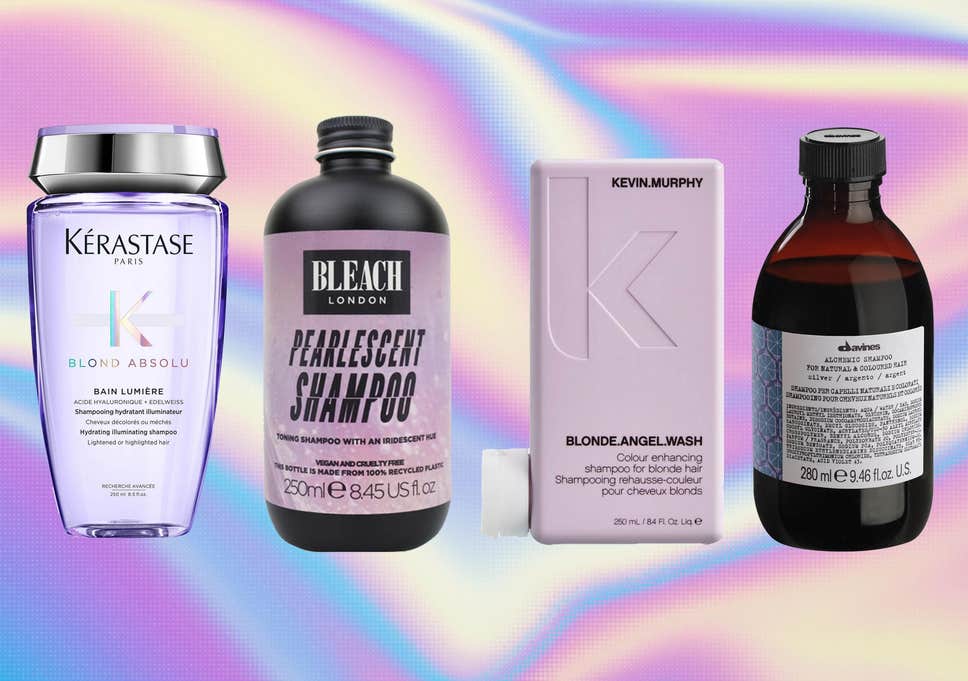
4. Kerastase Blond Absolu Bain Ultra-Violet Purple Shampoo
Best for: Blonde balayage that is also dry and needs significant hydration alongside brass control, particularly post-bleach or for fine, fragile hair.
Kerastase differentiates their Blond Absolu line by combining toning with genuine moisturizing ingredients. Most purple shampoos focus almost entirely on pigment delivery and treat hydration as an afterthought. This one leads with hyaluronic acid, which is one of the more effective humectants in hair care, capable of holding significant water relative to its molecular weight. The toning still works, but your hair does not feel stripped afterward, which is the common complaint about strong purple formulas.
Key ingredients: Hyaluronic acid for deep moisture and strand strengthening. Ultra-violet neutralizers (their branded combination of blue and violet pigments). The formula does contain SLES and should be used as a one-to-two-times-per-week toning rotation, not daily.
What real users say: A blogger with long fine hair who has alternated between highlights, full-head bleach, and balayage for many years noted that the Bain Ultra-Violet is noticeably less drying than competing purple shampoos, and that they use the violet version bi-weekly alongside the non-toning Bain Lumiere on other wash days. On Sephora and Amazon, common praise centers on the lack of hand-staining and the fact that hair feels soft after use, which stands out for a high-pigment formula.
Drawbacks: One of the priciest options on this list at around $38-$44 for 8.5 oz. The SLES in the formula means it’s not ideal for daily use. Some users find the toning effect subtler than Fanola or Olaplex 4P on very brassy hair, which may require leaving it on longer.
Price tier: Premium.
5. Pureology Strength Cure Blonde Purple Shampoo
Best for: Brunettes with blonde balayage highlights, particularly those with color-treated hair that also needs structural repair alongside toning.
Pureology’s sulfate-free formula uses a combination of violet pigments and their Keravis protein complex, which is a hydrolyzed vegetable protein designed to temporarily reinforce the hair shaft. The combination is useful specifically for the balayage client who has both lightened sections (needing toning) and color-treated darker roots (needing gentle cleansing that won’t strip).
Key ingredients: Astaxanthin, a powerful natural antioxidant from algae, which helps protect the color from oxidative degradation. Keravis protein for temporary cuticle repair and strengthening. Violet pigments. The formula is sulfate-free and also silicone-free, which makes it a better candidate for daily use than the SLES-containing toning shampoos above.
What real users say: On the Pureology website, a reviewer describes being a brunette with balayage highlights who uses it to keep the highlights from looking too caramel or warm. She recommends washing with a regular shampoo first, then using the Pureology as a second-step toning treatment, without letting it sit long, to prevent the highlights from going too light. Another Amazon reviewer with recently bleached ends noted that dry, brittle ends became soft and healthy after a few weeks of use, attributing it to the formula’s gentleness on processed hair. At Ulta, the Strength Cure Blonde line holds strong ratings with consistent praise for its fragrance and its balance between cleansing and moisture retention.
Drawbacks: The violet pigments are moderate in concentration. Heavy brassiness will not be resolved with this shampoo alone. It’s better as maintenance once tones are where you want them. Also on the pricier side for the size.
Price tier: Mid-range to Premium ($30-$38 for 8.5-9 oz).
6. L’Oreal EverPure Blonde Sulfate-Free Shampoo
Best for: Budget-conscious everyday maintenance for blonde or highlighted balayage with light brassiness, or anyone who needs an affordable daily driver between toning sessions.
This is the most accessible option on the list and should not be dismissed as a result. The EverPure Blonde formula is sulfate-free, paraben-free, and contains iris botanicals as its toning mechanism. The pigment concentration is lower than salon or premium options, which means it will not transform significantly brassy hair into an ashy blonde in one wash, but it also means it will not over-tone or stain your hands. For someone with naturally light hair who just got a subtle balayage, or someone maintaining their color at the six-to-eight week mark before their next salon visit, this gets the job done at a price that does not require a conversation with a financial advisor.
Key ingredients: Iris extract, used for mild color enhancement and shine in blonde/highlighted hair. Gentle anionic surfactants without SLS or SLES for daily-safe cleansing.
What real users say: PureWow’s Editor-in-Chief described it as a “budget version of a salon toner” recommended directly by her stylist. Multiple Amazon reviewers with fine, highlighted hair note that it keeps brassiness at bay between appointments without the drying effect of stronger toning shampoos. The EverPure line overall has consistent feedback for being lightweight and not weighing fine hair down.
Drawbacks: Not strong enough for heavy or persistent brassiness. Will not repair bond damage. Results are subtle, which is a feature for some users and a limitation for others. If your hair has gone noticeably yellow or orange, you need one of the stronger toning formulas above before settling into this for maintenance.
Price tier: Budget ($10-$14 for 8.5 oz).
7. Redken Color Extend Brownlights Blue Shampoo
Best for: Brunette or dark-haired clients with balayage who are fighting orange, copper, or reddish undertones in their lightened pieces.
This is the only blue shampoo on the list, and it is here because brunette balayage is genuinely a different chemical situation than blonde balayage and needs different toning. The underlying natural pigment in brown hair is predominantly red and orange. When those sections are lightened, the bleach removes pigment layers unevenly, and orange undertones dominate. Purple shampoo does not cancel orange well because violet and orange are not directly opposite on the color wheel. Blue is. Redken’s Brownlights formula uses blue pigments specifically calibrated to add depth and cool richness to brown tones rather than lightening them toward ash.
Key ingredients: Blue pigments (designed to counteract orange/copper undertones in brunette hair). Amino acids for conditioning. The formula is not completely sulfate-free but is designed for one-to-two times per week use, not daily.
What real users say: Multiple hair care sources, including salon1150.com in a February 2026 review, recommend blue shampoo explicitly for brunette balayage over purple shampoo, citing the color-theory basis for the distinction. Stylists at salon environments who work specifically with brunette balayage clients frequently cite Redken Brownlights as a reliable go-to for maintaining richness and preventing the orange-fade that makes brunette highlights look “dirty” rather than dimensional.
Drawbacks: Not for blonde or platinum balayage at all. Not sulfate-free, so rotate with a gentler daily shampoo. Results can look subtle, especially on very dark natural bases, and may need to be paired with an in-salon toner refresh every few months.
Read more : Best Blue Black Hair Dye for Dark Hair Reviews
Price tier: Mid-range ($28-$34).
How We Selected These Products
Product selection for this article involved three parallel tracks: ingredient analysis, community review aggregation, and verification against current stock and availability.
On the ingredient side, each formula was evaluated against what is known about how bleach-processed hair responds to surfactants, toning pigments, humectants, and bonding agents. Claims made about ingredients in this article are linked to peer-reviewed sources where available, or marked as needed.
Community review data was gathered from Amazon, Ulta, and Sephora rating pages, as well as published roundups from NBC Select, PureWow, and Hair.com, which each disclosed their editorial methodology. Reddit discussions in r/HaircareScience and r/curlyhair were reviewed for user-reported real-world experiences, particularly around concerns like over-toning, dryness, and scalp sensitivity.
Limitations to acknowledge: These products were not independently lab-tested as part of this review. Color-fading claims from brands are based on their own controlled test conditions, which may not replicate how a specific person washes their hair, what their water hardness is, or how frequently they heat-style. Community reviews represent aggregated anecdote, not clinical outcomes. Hair response to any shampoo is individual and depends heavily on base hair color, porosity level, the specifics of the balayage technique used, and wash frequency.
Expert Perspective
Dr. Shani Francis, a board-certified dermatologist and trichologist based in Illinois who specializes in hair and scalp disorders, has noted in interviews on the role of formulation pH in color retention. Her view, consistent with published trichology literature, is that the pH of a shampoo matters more than most consumers realize: hair and scalp health is optimal at around pH 4.5-5.5, and many conventional shampoos are formulated higher than that, which leaves the cuticle in a more open state and allows color molecules to escape more readily with each wash. She has specifically emphasized that for chemically-processed hair, looking for pH-balanced or acidic-pH shampoos is a meaningful, evidence-based criterion, not marketing language.
This is reflected directly in the Redken Acidic Color Gloss formulation and is supported by research on the effect of shampoo pH on hair fiber integrity, which found that lower-pH shampoos reduced cuticle damage and improved surface smoothness compared to alkaline formulas on bleach-processed hair.
Real Talk from the Community
From r/HaircareScience:
“okay so I’ve been doing the whole ‘alternate your purple shampoo with a regular one’ thing my colorist told me but I went too heavy on the purple for two washes in a row and now my blonde pieces look kind of gray and flat. Not the vibe I paid $300 for. Does this reverse on its own or am I stuck washing it out?”
Editorial note: Over-toning is one of the most common mistakes with purple and blue shampoos, and it happens because the pigment is genuinely cumulative. The effect does fade with regular non-pigmented washes over one to two weeks, especially if you use a clarifying shampoo once. The underlying lesson is that toning shampoos should be used one-to-two times per week maximum, never back-to-back, and should always be followed by a moisturizing non-toning formula the next wash. The products in this list are ranked partly on pigment concentration, which informs how aggressively they tone and how often it is safe to use them.
From r/curlyhair:
“I have 3a curls and I got a partial balayage a few months ago. My ends are so dry I could snap them. I’ve been using a sulfate-free shampoo but it’s not enough. What am I missing? Do I need a different shampoo entirely or is this more of a mask situation?”
Editorial note: For curly hair with lightened sections, the dryness issue is compounded because curly hair is naturally drier to begin with, and bleaching increases porosity dramatically. The shampoo matters, but it is often the least impactful intervention at this stage. A protein treatment followed by a deep moisture mask, and then switching to a shampoo that contains a bonding or protein ingredient alongside sulfate-free cleansers (Olaplex 4P and Pureology Strength Cure Blonde both fit this), will address the underlying structural damage more directly than a hydrating shampoo alone.
Frequently Asked Questions
Q: Do I need a purple shampoo specifically designed for balayage, or will any purple shampoo work?
A: Most purple shampoos will deposit violet pigments and cancel yellow tones regardless of whether the label says “for balayage” or not. The “balayage” label is largely marketing. What matters is the pigment concentration, the surfactant quality, and whether the formula includes moisturizing ingredients suited to porous, lightened hair. The products in this list were selected because their full formulas are appropriate for balayage, not just their branding.
Q: How often should I use a purple or blue toning shampoo on my balayage?
A: One to two times per week is the standard recommendation across colorists and trichologists. For lighter formulas (like L’Oreal EverPure Blonde), every other wash is reasonable. For highly concentrated formulas (like Olaplex 4P or Fanola No Yellow), once a week with a maximum contact time of three to five minutes is more appropriate to avoid over-toning. Always follow with a conditioner.
Q: Is it true that I should wait 72 hours before washing my hair after getting a balayage?
A: Yes. Freshly lightened and toned hair has an open cuticle that has not fully settled around the new color. Washing within 48 to 72 hours removes a disproportionate percentage of the toner pigment in that first shampoo. Waiting allows the cuticle to partially close and the color to stabilize. This is one of the highest-return habits for extending the life of your balayage.
Q: Can I use a purple shampoo if my balayage is on dark brunette hair?
A: Generally not as effectively. Purple shampoo is designed to cancel yellow tones, which are the dominant undertone in lightened blonde or light-brown hair. Brunette balayage more commonly reveals orange and copper tones when the lighter sections fade. Blue shampoo cancels orange tones based on color-wheel opposition. The Redken Color Extend Brownlights Blue Shampoo in this list is the correct choice for brunette balayage. Purple shampoo used on brunette highlights can sometimes add an unexpected cool or ashy cast to the color but will not address the primary warmth effectively.
Q: Does my balayage really need a different shampoo than what I was using before I colored my hair?
A: Yes, in practice. Unprocessed hair has an intact cuticle that is more resistant to surfactant penetration and color loss. Once sections of your hair are bleached and lightened, those sections are more porous, more fragile, and will fade visibly faster if you continue using a harsh-surfactant shampoo. The color fade is not gradual and invisible; it is noticeable and will bring you back to the salon sooner.
Q: What if I have both bleached lightened pieces and a sensitized scalp from the service?
A: This is more common than it sounds. The bleach used in balayage can temporarily irritate the scalp, particularly if the service ran close to the root. During that recovery window, avoid shampoos with high fragrance concentration or potential irritants (menthol, heavy essential oils, alcohol early in the ingredient list). A fragrance-free or low-fragrance sulfate-free formula is the safest choice for the first two to four weeks post-service. The Redken Acidic Color Gloss or L’Oreal EverPure lines are milder options during this period.
Q: Are there any shampoo ingredients I should actively search for to help repair bleach damage?
A: Yes. Hydrolyzed proteins (listed as hydrolyzed wheat protein, hydrolyzed silk, or hydrolyzed keratin) temporarily fill and smooth the lifted cuticle, reducing breakage and improving manageability. Panthenol (also listed as provitamin B5) penetrates the shaft and improves elasticity. Olaplex’s bis-aminopropyl diglycol dimaleate addresses deeper structural damage by targeting broken disulfide bonds in the hair cortex. These are among the most evidence-supported ingredients for chemically-damaged hair, per published cosmetic chemistry literature.
Q: What should I do if my hair is still very brassy or dry even after trying these shampoos?
A: If several weeks of consistent use with the right toning shampoo and a moisturizing routine does not resolve brassiness or dryness to a satisfactory degree, this is a signal to consult your colorist and, if scalp or hair health concerns persist (excessive shedding, breakage that is not resolving, scalp irritation), see a dermatologist or trichologist. Persistent hair and scalp issues after a color service can sometimes indicate over-processing or an underlying scalp condition that a shampoo list alone cannot address.
Conclusion
For blonde or platinum balayage, the Olaplex No.4P remains the most substantive option for anyone dealing with brassiness and damage simultaneously. The bond-repair technology earns its price premium in this context. For brunette balayage where orange undertones are the primary issue, the Redken Color Extend Brownlights Blue Shampoo does what no purple formula can: it targets the actual underlying pigment problem. For daily maintenance between toning sessions, the Redken Acidic Color Gloss is among the most thoughtfully formulated options for color longevity and shine.
Hair results depend significantly on individual porosity, wash frequency, water hardness, and the specific technique your colorist used. Consistency of use over several weeks matters more than any single wash. And if your concerns go beyond cosmetic fading into scalp health, excessive breakage, or persistent irritation after a color service, these products are not a substitute for professional evaluation.
Sources: https://www.hairstyleeditor.com
Category: Hair care